
The harvest is over. This year, I can say that I have broken a record that I would rather not have broken: by 30 September, we had already harvested all the grapes.
I had never finished the harvest this early before. In the past, grapes were harvested around mid-October at the earliest, so we’re about a month ahead of where we were forty years ago.
As I mentioned in the last newsletter, this year has been far from simple. The summer was characterised by intense heat and dryness. Notably, three violent hailstorms battered the hilly region, causing significant damage to the Garganega and Durella vineyards.
The heat accelerated the ripening process, and by the first week of September, we had begun harvesting the grapes intended for Primo Incontro. Apart from some rain around 10 September, the weather was dry until the end of the month.
Unfortunately, the harvest of grapes has been very small. The hail and the heat reduced production, forcing me to make certain choices. This year, I have decided to focus on everyday wines such as Primo Incontro and El Gian, and to leave other labels behind. The grapes damaged by hail were not suitable for maceration, and given the limited quantities available, I chose to allocate the best bunches to the wines I did not want to miss out on.
Fortunately, the vineyards in the Soave area, where the grapes for the Cuvée dei Vignato are grown, were less badly affected by the weather, enabling us to harvest the grapes needed to produce these wines. On the other hand, we had to reduce the quantity of grapes intended for drying. This means that there will be fewer bottles of Passito, but each one will be made with the same level of care.
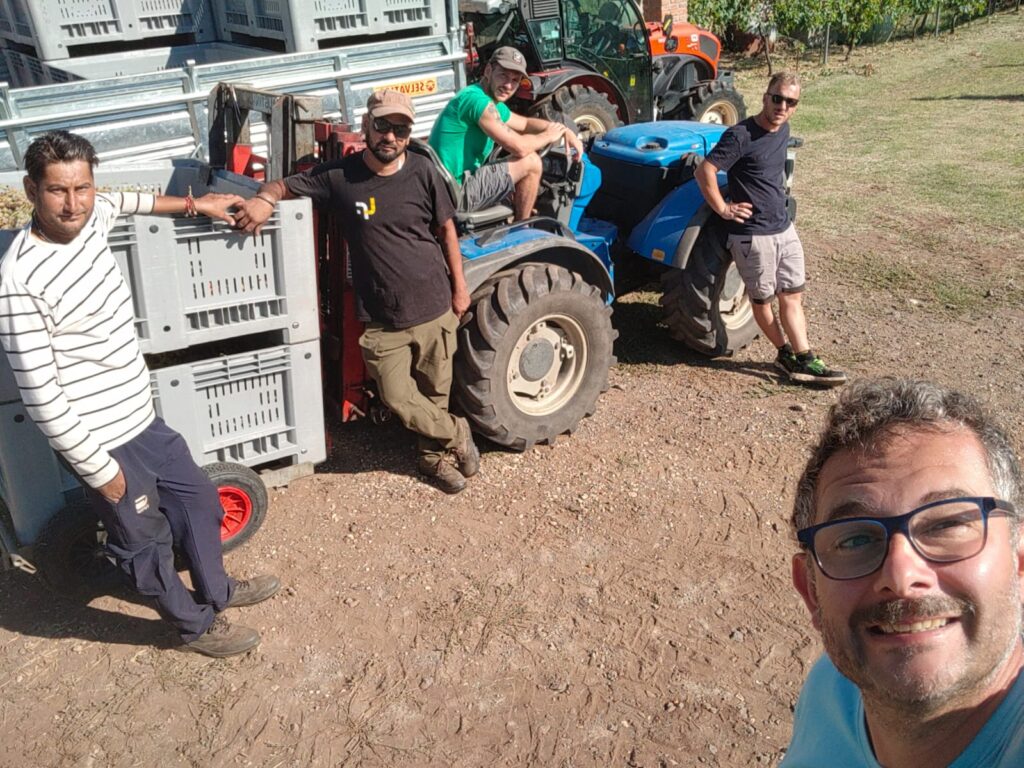
This was a highly selective harvest. We went through the same vineyards three times, carefully selecting bunches for drying and for producing bottled and unbottled wines. Paradoxically, the hailstorms that damaged the grape yield have also enabled the vines to concentrate their energy on the surviving bunches. Despite the scorching heat, they ripened very nicely, producing concentrated berries with little juice.
The first racking is proving to be satisfactory: the wines are very fragrant, rich, and chewy. It is still too early to draw definitive conclusions, but the quality of what we have managed to bring to the cellar is very promising.
In the end, this year, we will only produce five of the twelve labels we usually make. This is not what I was hoping for at the start of the season. However, working in the vineyard also means adapting to what nature delivers, making choices and trying to make the best of it.
As they say, every cloud has a silver lining. And, with a healthy dose of optimism — which is never in short supply here — I can say that we have managed it again this year!😉🍷